The Challenge
By 2017, Winona’s destination identity was visually and strategically outdated. The long-running “torn parchment” aesthetic—originally created by an outside agency—hadn’t changed for almost 10 years. It seemed safe, predictable, and disconnected from younger travelers. Data confirmed the issue:
- A commissioned perception survey showed Winona ranked significantly lower among every demographic of travelers under the age of 65.
- Competing communities with fewer amenities were widely perceived as more appealing.
- The social media audience skewed heavily 65+, with minimal engagement from Millennials or Gen Z, and even Gen X.
To remain competitive, Winona needed not just new visuals, but a fundamental shift in tone, attitude, and creative approach.


The Strategy
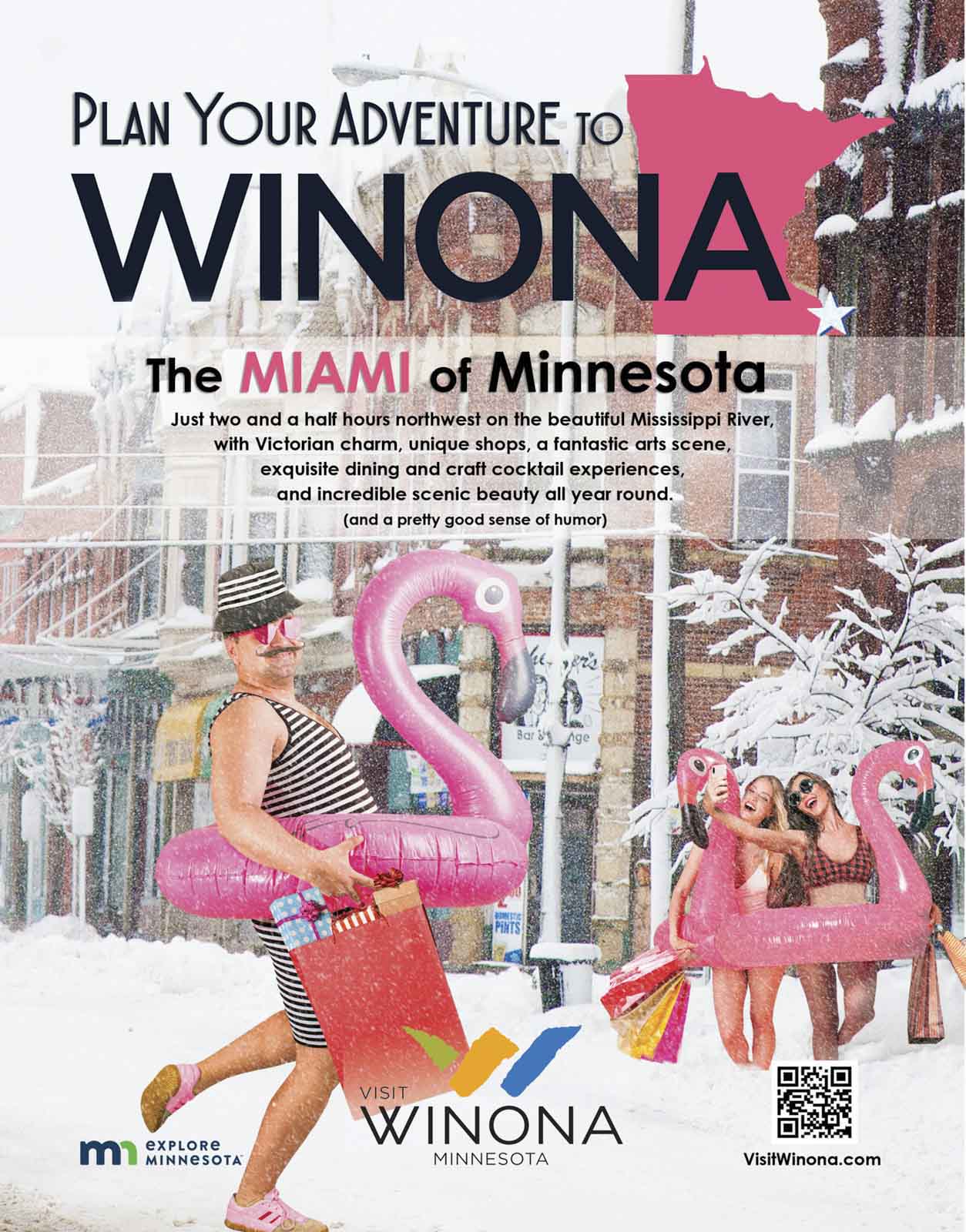
Our team set out to reposition Winona for younger audiences by embracing cleverness, confidence, and modern storytelling. The goal was to reintroduce the destination with energy that felt fresh, unexpected, and culturally aware—far removed from the region’s traditional tourism voice.
The approach centered on bold, creative ideas, humor-forward messaging, and content tailored to viewers in their 20s, 30s, and 40s.
The Creative Execution
Key initiatives included:
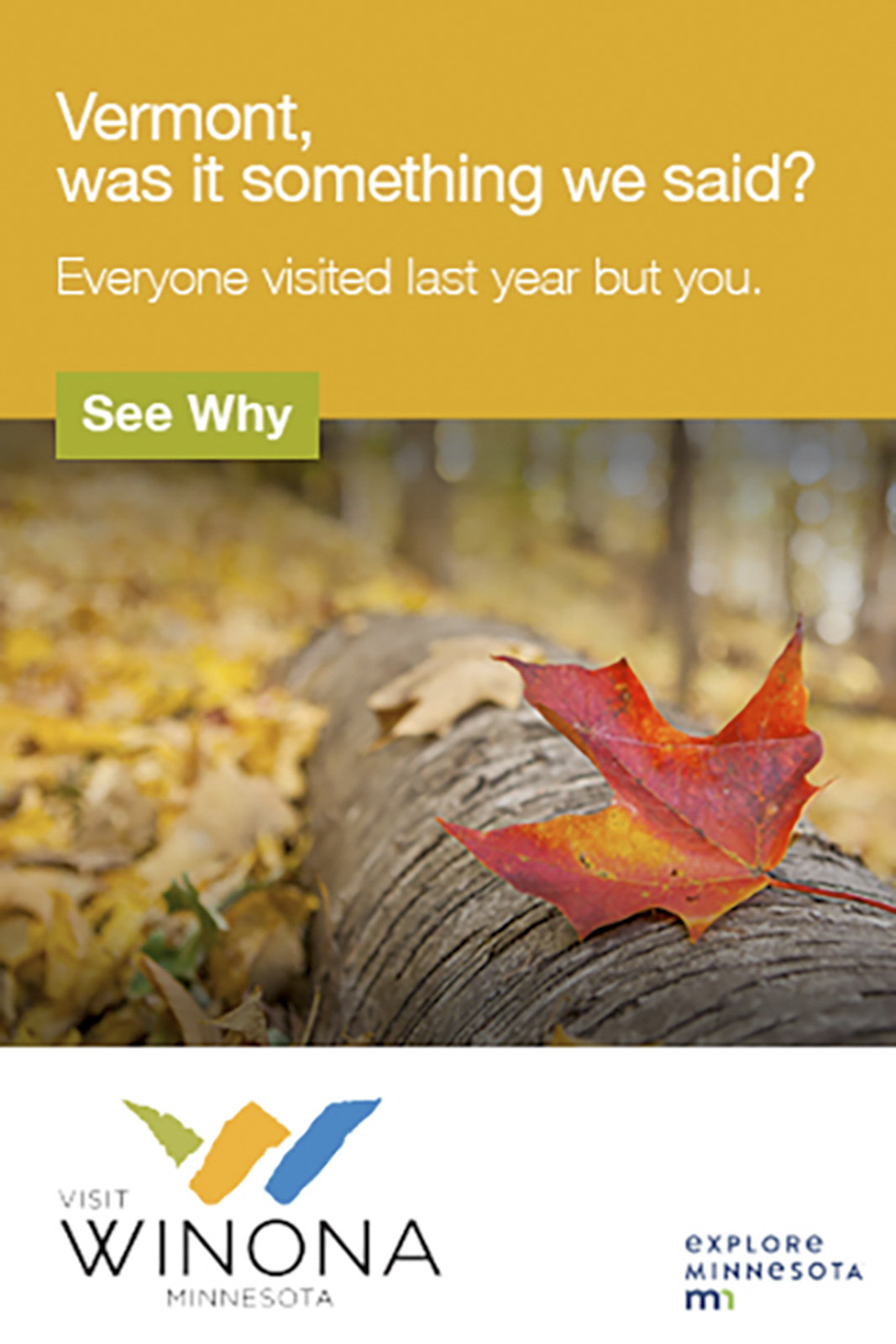
- A playful digital campaign—“Vermont, was it something we said?”—leveraging the discovery that Vermont was the only state that hadn’t visited. Geo-targeted ads sparked immediate engagement.
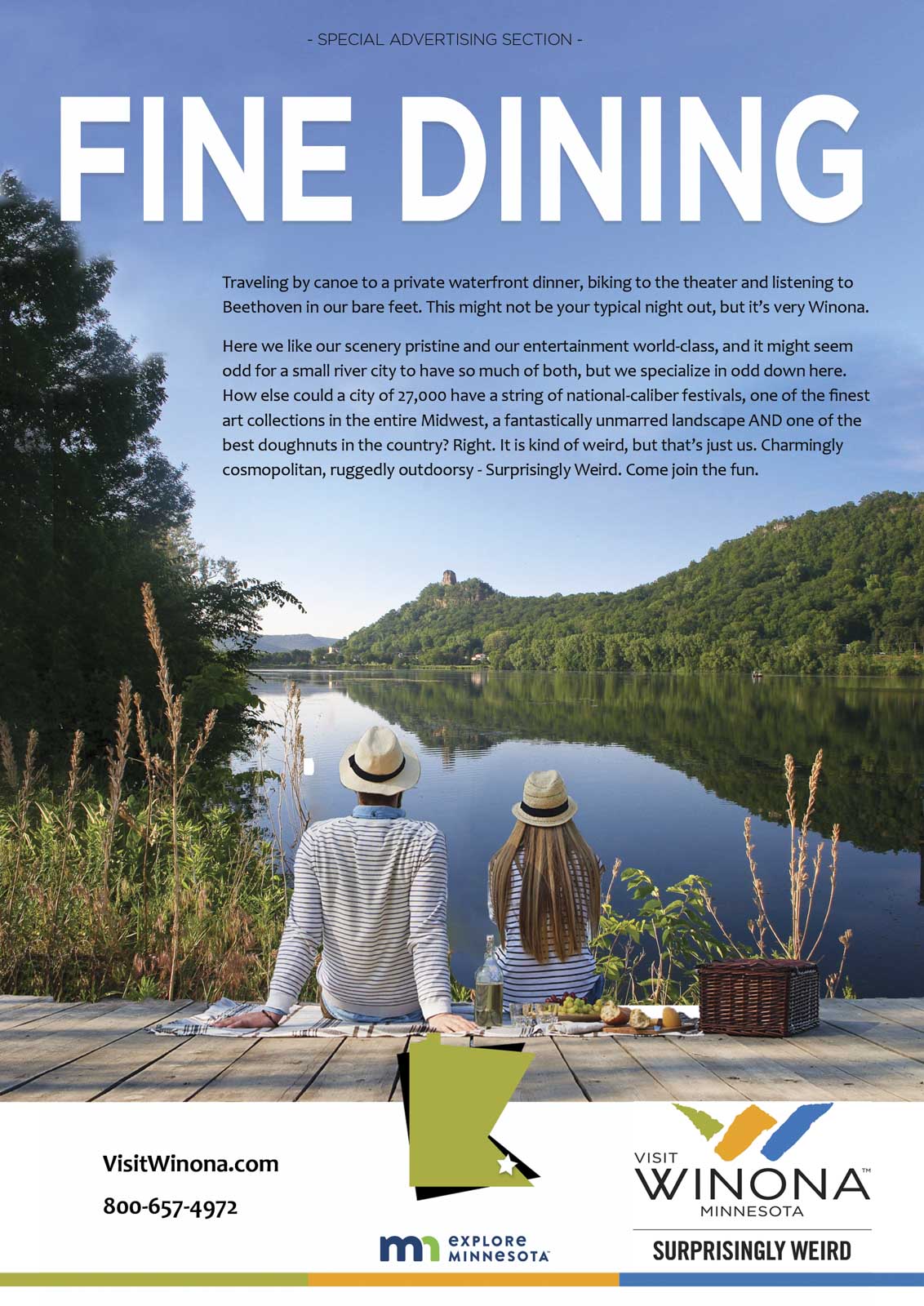
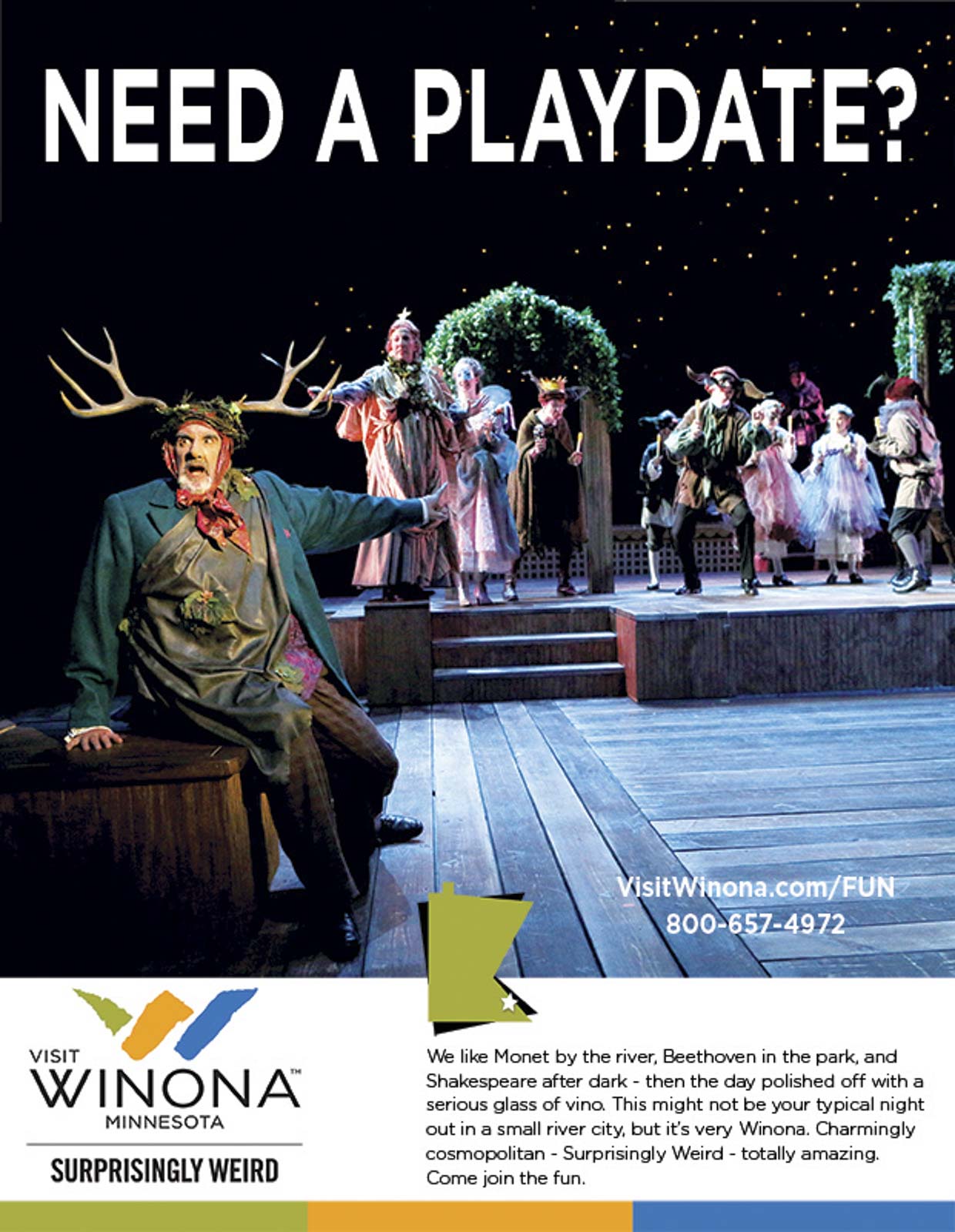
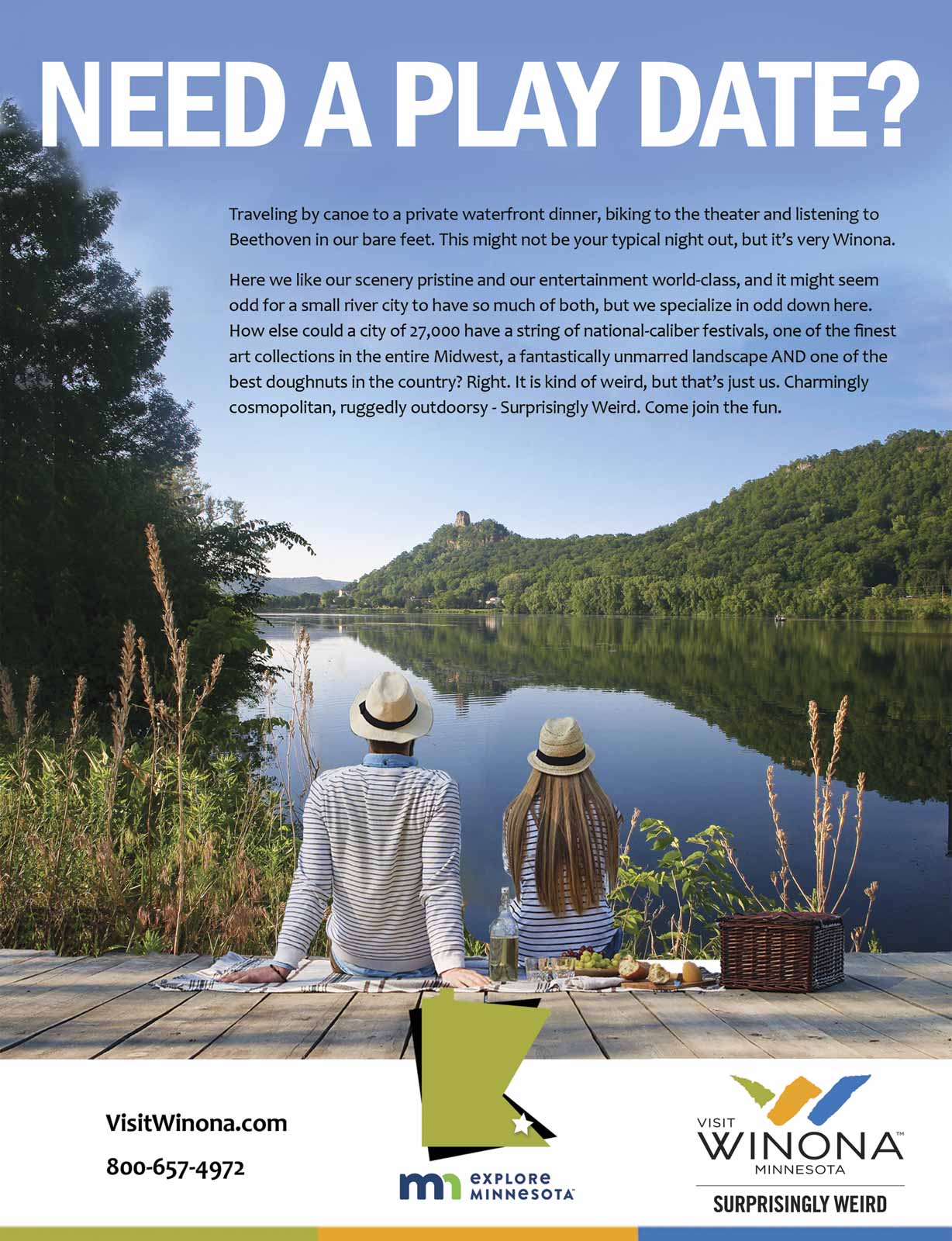
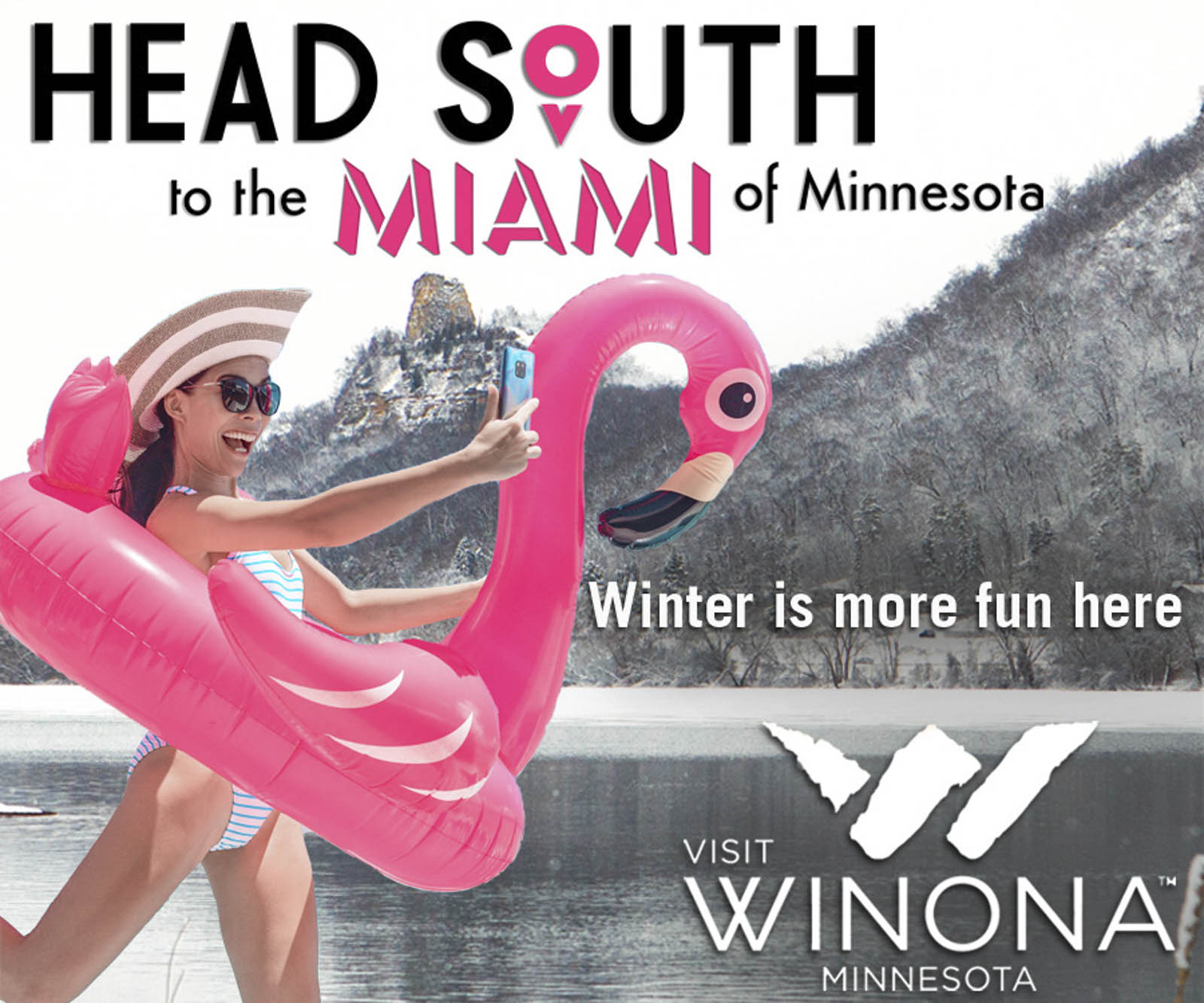
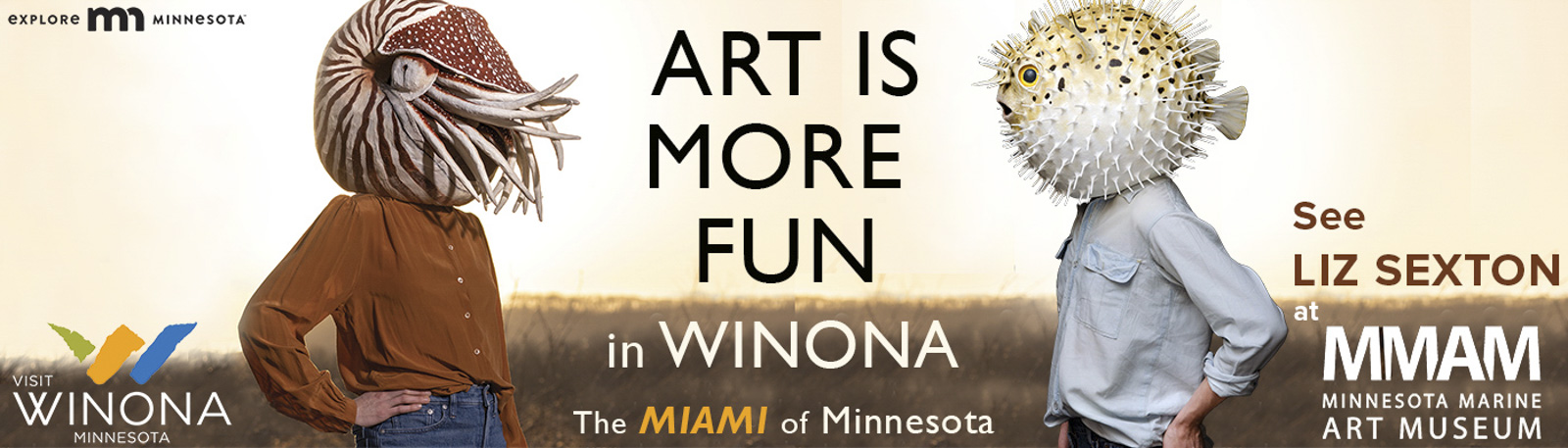
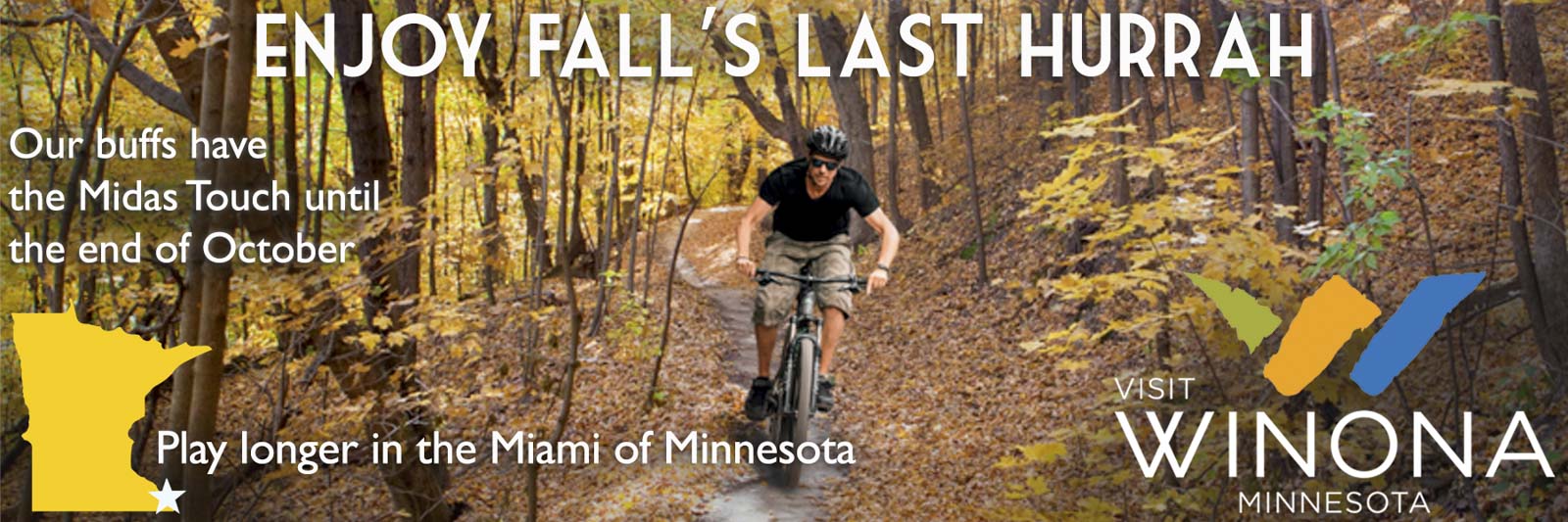
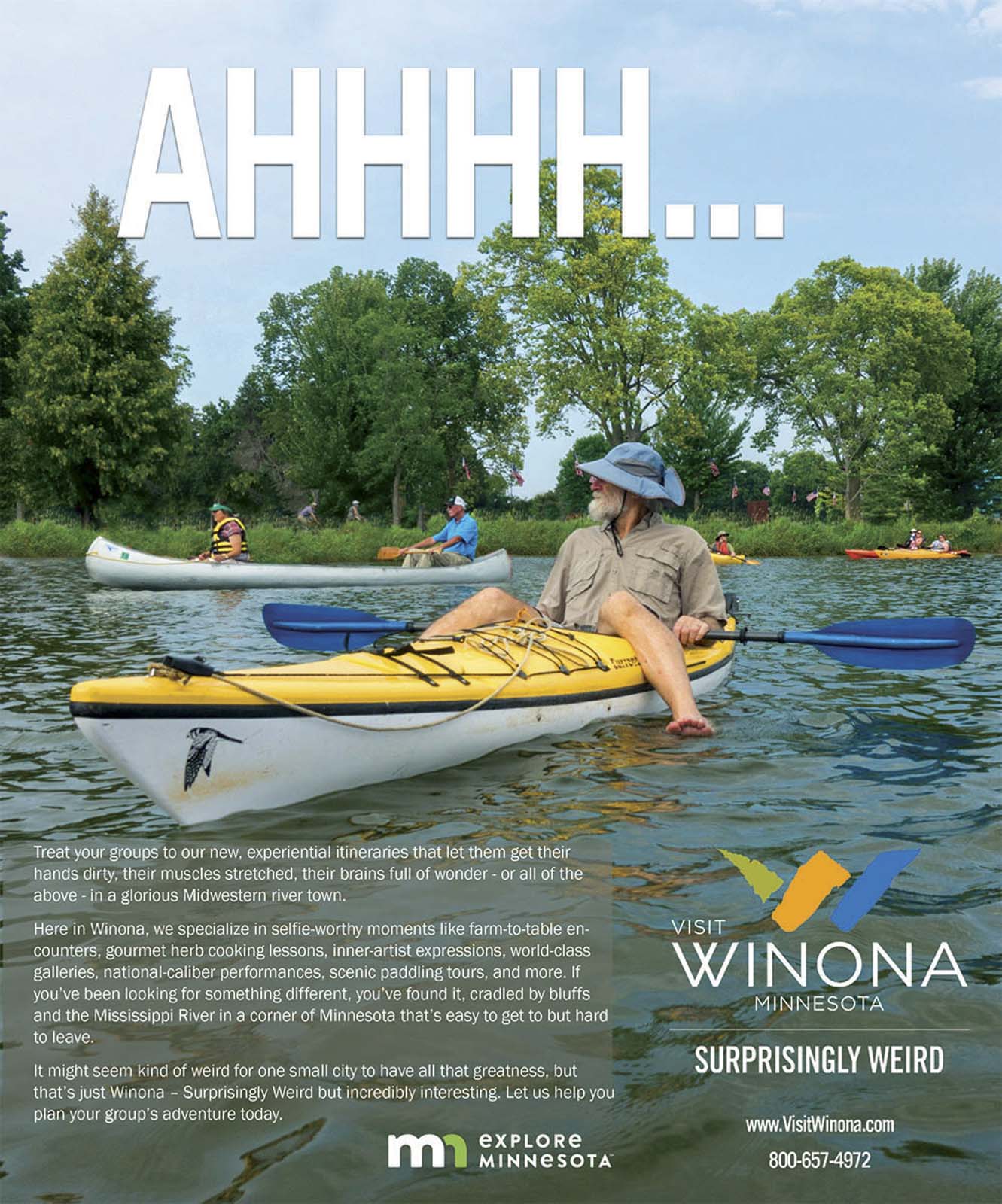
- A shift to full-page, story-driven print and digital creative that felt more like editorial features than ads.
- A six-part video series blending on-the-street interviews with cinematic footage of Winona’s landscapes, festivals, and personality.
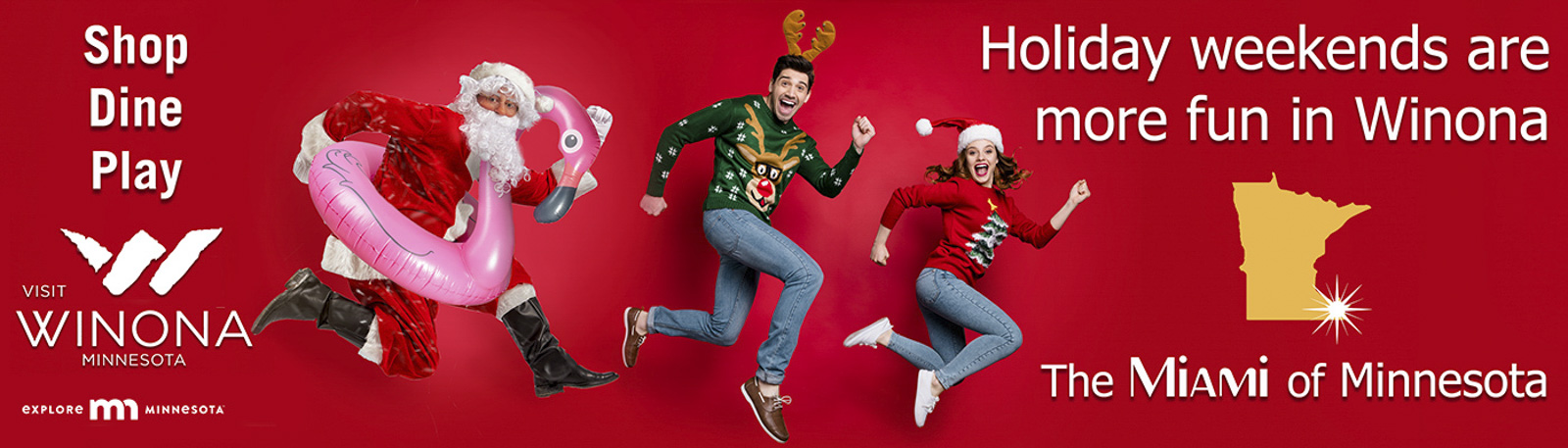
- Short-form social content created to appeal to younger viewers through modern visual language and playful tone.
- A weekly Facebook Live series that humanized the destination and offered authenticity younger audiences gravitate toward.

The Results
The demographic transformation was swift:
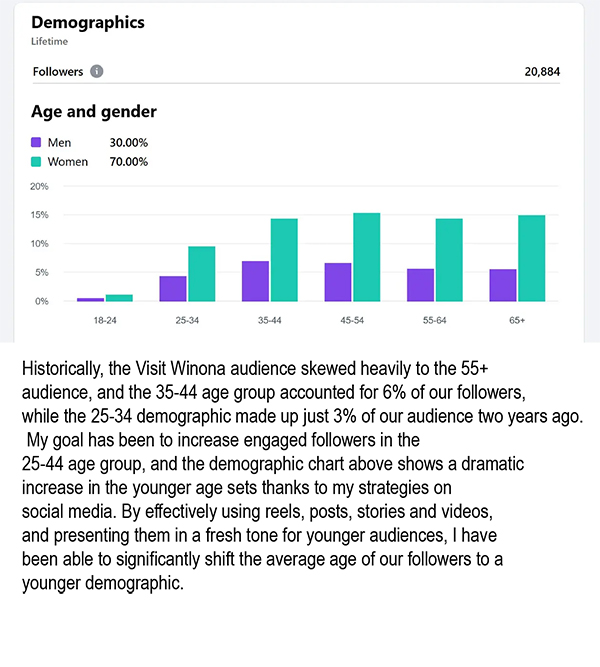
- Engaged Facebook users aged 25–34 increased from 3% to nearly 10%.
- The 35–44 demographic doubled, rising from 6% to almost 15%.
- For the first time, the combined 35–64 audience matched the previously dominant 65+ group.
Winona shifted from being perceived as “sleepy and traditional” to “interesting, innovative, and worth rediscovering.”
This foundational work paved the way for the bold brand evolutions that followed—proof that when you change the story you tell about a place, you change who hears it.